Account Information
Adobe Real-Time CDP Features
Customer Activation
With Adobe Real-Time CDP, you can increase customer engagement, loyalty, and business performance
. Meet with customers in real-time across multiple devices throughout the customer journey
.
. Meet with customers in real-time across multiple devices throughout the customer journey
.
Target
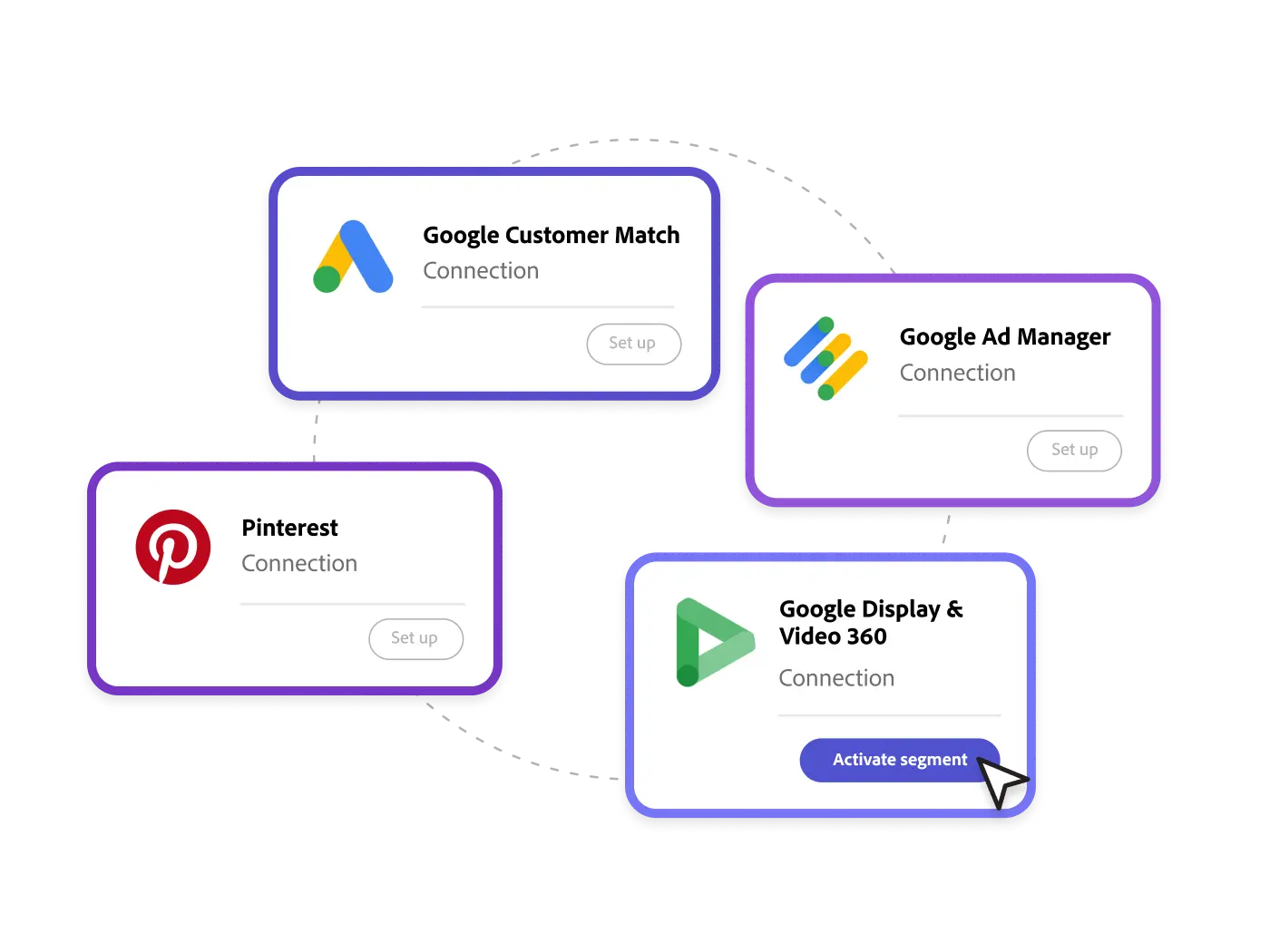
With pre-built channel integrations, you can activate campaigns, emails, targeted ads, and more. You can also use the API to create custom targets.
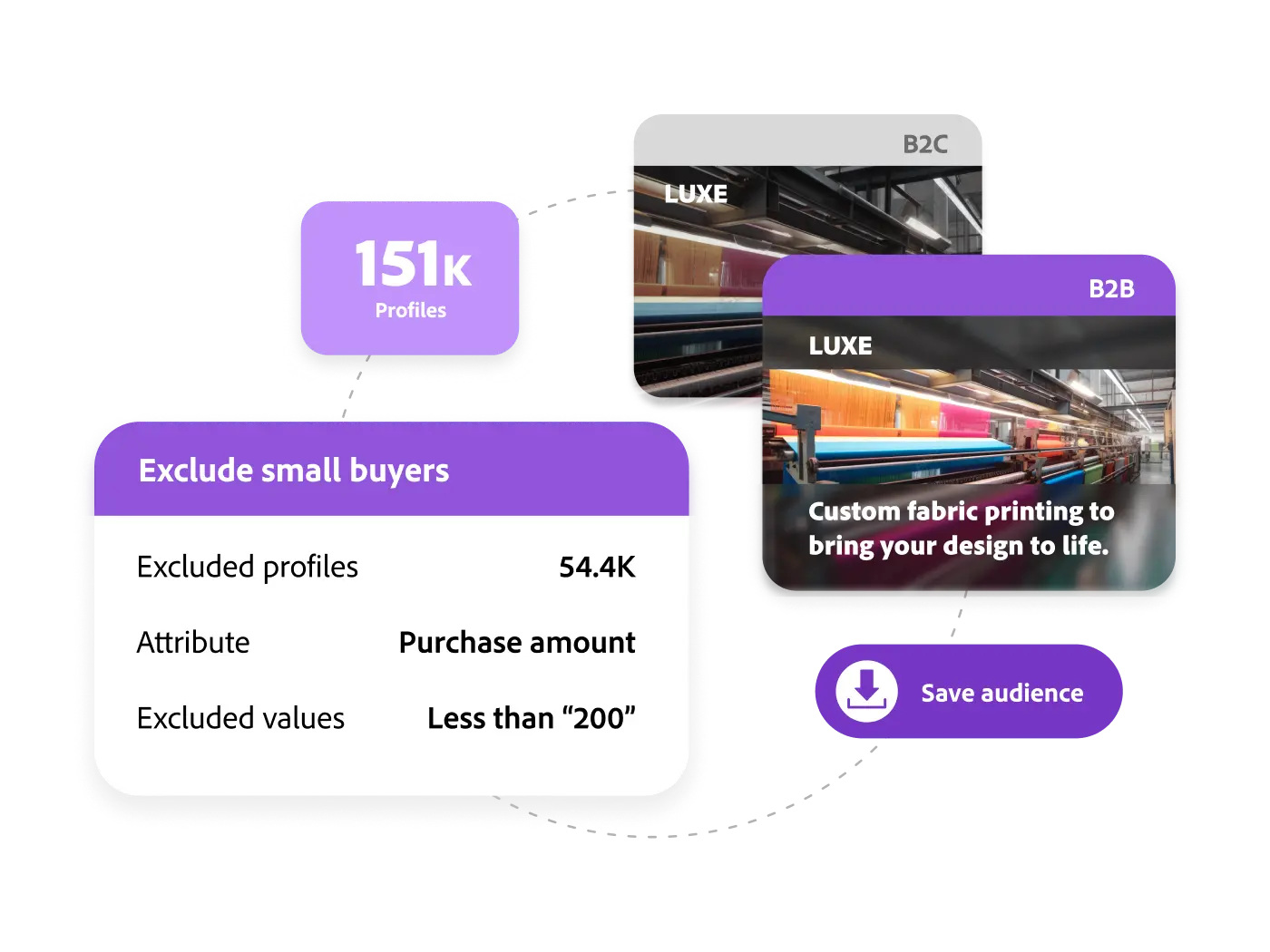
- Individual and account-based customer activation.You have the flexibility to activate B2C or B2B campaigns based on your personal or account ID.
- More than 75 targets.You can choose from ads, analytics, email, personalization, surveys, and voice of the customer to easily access where consumers are primarily staying.
- Generate targets flexibly.You can use the SDK to create targets with custom or internal categories.
- Marketing workflows.Guided workflows help you target customers and understand how they're being leveraged across the enterprise.
- Built-in controls. Enforce governance and ensure that ecosystem partners only use the right data for personalization.
Unified management
Plan customer journeys with ease.
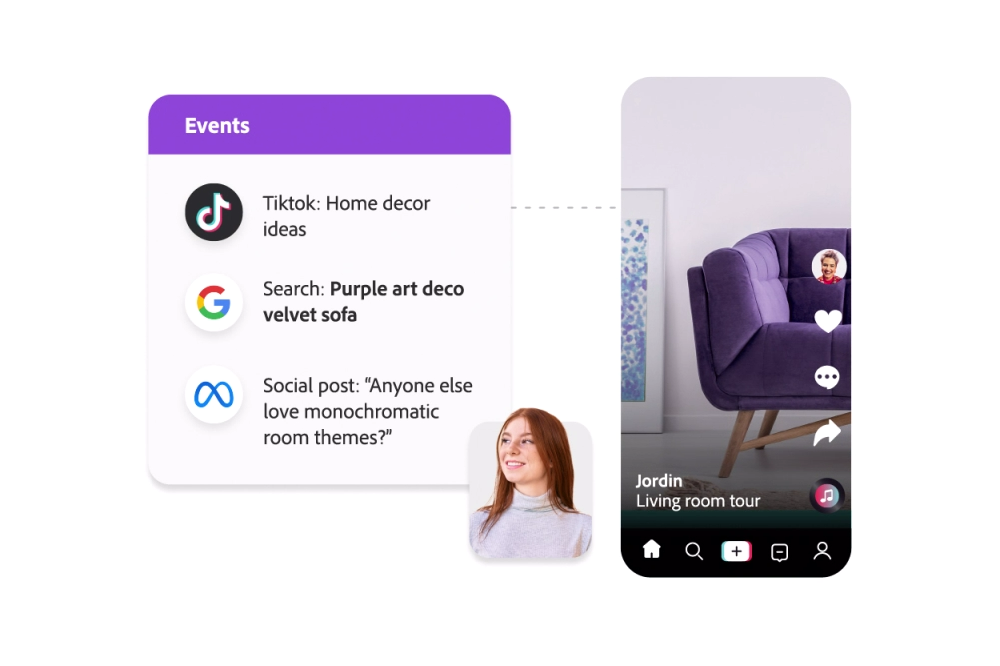
- Non-marketing signals. You can use signals outside of marketing touchpoints to gain a more holistic view of customer behavior and needs and improve the customer experience.
- Results-driven approach. Based on defined conditions, you can increase customer conversion rates through immediate actions.
Real-Time CDP Connections
Efficiently collect and use event-specific data without the need for third-party cookies or legacy integrations.
- Data collection.You can use Adobe Experience Platform Edge Network to securely scale data requests.
- Event forwarding. Server-side data event forwarding is available in real time.
- Tag management. With our industry-leading tag management system, you can integrate web, mobile, and server APIs to streamline analytics, marketing, and ad tag management.
- Web and mobile SDKs.You can minify and compress all Adobe product libraries into a single development kit for web and mobile platforms.
Learn how to use customer activation
Learn more about how to activate CDP and more in Experience League. You
can check out various content related to how to use it, such as manuals, tutorials, and user guides.
can check out various content related to how to use it, such as manuals, tutorials, and user guides.
Let me answer any questions you may have.
What is Audience Activation in Adobe Real-Time CDP?
Audience activation refers to the process of turning a rich, integrated customer profile into an actionable audience that can be used across multiple channels, including email, paid media, in-app messaging, and call centers. This feature is tightly integrated with Adobe Real-Time CDP's real-time profile store, so you can take action as soon as behavioral and contextual data changes. This allows each stakeholder to:
Marketers and creatives can design campaigns that respond to customer signals in real-time. IT and data teams can build reliable pipelines that reliably sync audiences to downstream systems without manual effort. CIOs and CMOs can make personalization work fast, consistent, compliant, and scalable.
How does audience activation work in Adobe Real-Time CDP?
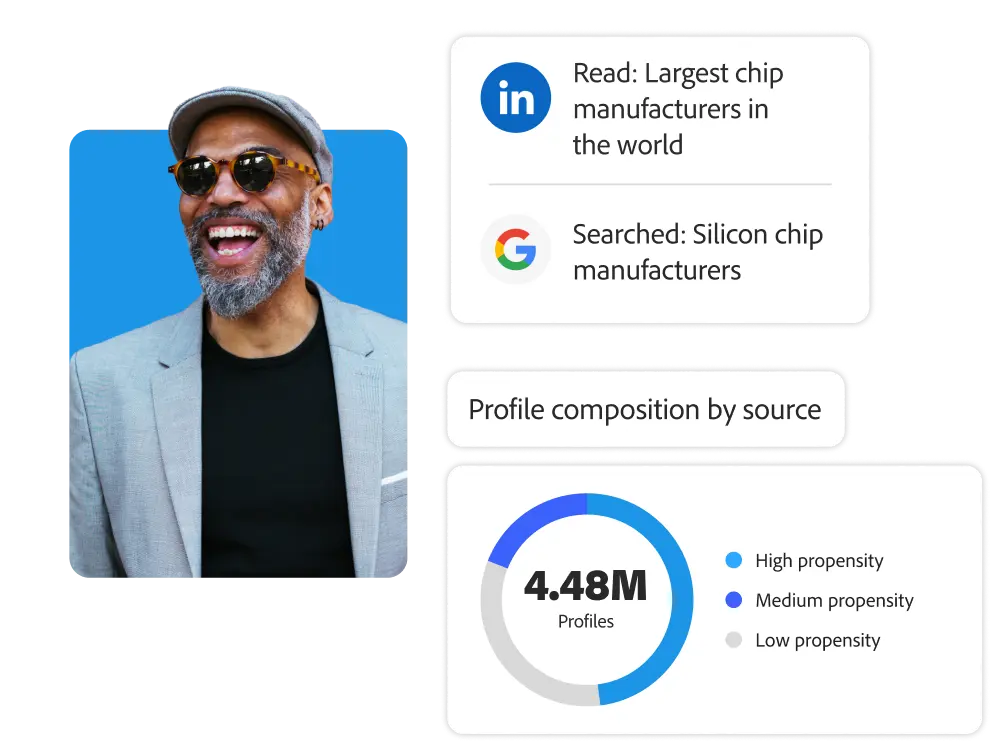
The process begins with segmenting customers based on unified profile data, including demographics, real-time behavior, transaction history, consent status, and more. Once the segment is set up, Adobe Real-Time CDP connects to the activation target through pre-built connectors, APIs, or batch/streaming workflows.
- Active audiences can be leveraged for:
- Targeted ads
on paid media platforms (e.g., Google, Meta, LinkedIn)
- Real-time personalization
in Adobe tools like Journey Optimizer and Target
- Trigger
lifecycle campaigns with CRM, email, and push systems
- Customer service, loyalty programs, or sales support
in internal systems
Adobe is a strong differentiator in the speed and intelligence of these processes: Profiles are updated in milliseconds, and segments are recalculated and activated based on new behaviors as they occur, without the need for manual updates.
How fast is activation? Can I use real-time signals?
Yes, Real-Time CDP is built to be activated immediately. It supports both data collection and real-time streaming of audience updates. This means that after a user browses a customer's website, abandons their cart, or engages with them on a mobile app, they can trigger an activation within seconds.
At this speed, creative and marketing teams can stay contextually relevant and guide customers through the right offers, messaging, and journeys. It also helps product and IT teams reduce their reliance on outdated batch tasks that cause delays and friction.
Can I activate audiences on both B2C and B2B channels?
Yes, Adobe Real-Time CDP supports both individual profiles (B2C) and account-based profiles (B2B). You can use one or both profile types to build audience segments, and enable them on platforms that support consumer or business-driven engagement.
For example:
- For B2C, travel brands can target individual customers who have shown interest in summer package offerings but haven't booked yet.
- For B2B, software companies can accelerate conversions by targeting all decision-makers in the account who show purchasing behavior in the later stages.
This dual support allows CMOs to unify marketing operations regardless of buyer type, while CIOs manage a single platform for all customer data initiatives.
How does Adobe Real-Time CDP ensure that its enabled audiences comply with privacy regulations?
Compliance is enforced at every stage, from segmentation to activation. Adobe Real-Time CDP uses label-based data governance, consent and permissions management, and workspace-level controls to ensure that only data with the appropriate permissions can be activated.
Teams can restrict usage by region, brand data sensitivity. Additionally, Real-Time CDP integrates with consent systems, allowing you to exclude individuals who opt out of targeting or sharing their data. This gives legal, marketing, and IT leaders confidence that personalization efforts won't cause compliance issues.
Can I coordinate audience activation across multiple channels and teams?
Yes, Real-Time CDP supports collaborative audience creation and cross-channel integration management. Once you define and activate your audience, you can activate it across multiple tools, including ads, email, and web personalization, to ensure consistency across touchpoints.
For example, you can leverage a single "high-value lead" audience to:
- Trigger
ads on LinkedIn and Google Ads
- Sync with Adobe Journey Optimizer to personalize
email journeys
- Feed to Target to personalize
offline content
- Send notifications to sales teams in your CRM to support
real-time follow-ups
This alignment breaks down channel silos and enables creative, media, and lifecycle teams to deliver integrated experiences across the customer journey.
How does audience activation connect to business performance?
Effective audience activation increases conversion rates, reduces wasted ad spend, and enhances customer lifetime value. When profiles and segments are updated in real time, you have the following benefits:
- Reach
customers when they're most likely to convert
- Avoid
wasting exposure by excluding irrelevant audiences
- Extend
personalized journeys without increasing headcount
- Measuring ROI and refining
strategies at the audience level
CMOs can use this to increase campaign performance and contribution. CIOs can get more value out of their existing data investments and ensure interoperability and compliance of enterprise systems.