Account Information

Adobe Real-Time CDP Features

Enterprise Audience Management

With enhanced integration profiles and AI-powered insights and workflows, Adobe Real-Time CDP
Build the perfect audience, identify new audiences, and get targeted and relevant
with out-of-the-box tools You can provide a campaign.

Audience Agent

Use natural language prompts to create, manage, and optimize smart audiences quickly. It makes it easier and more efficient to work and speed up your launch.

    • Audience discovery and management. Manage principles and practices for data accuracy and proactively understand audiences while tracking changes in scale over time.
    • Audience creation. Create audiences based on recommendations that align with your campaign goals.
    • Optimize your audience. Use forecasting and audience estimation tools to automatically create targeted audiences or identify opportunities based on your goals, such as propensity. This allows you to make data-driven targeting decisions.

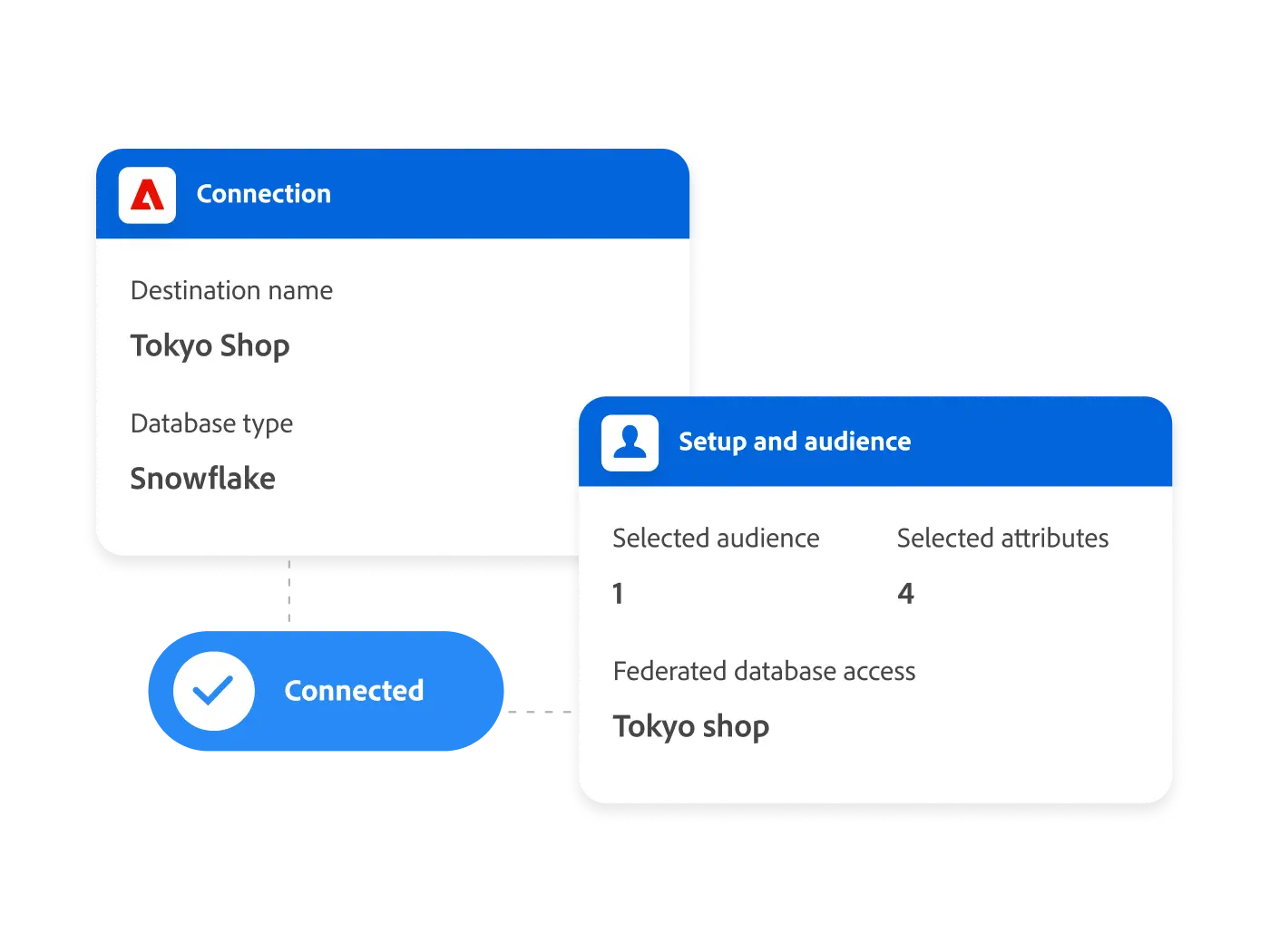
Unified audience configuration

Unified audience configuration allows marketers to combine customer profiles from partners and external sources to enhance their audiences. This allows you to use both batch and real-time data to make your targeting more effective. Integrate your own customer data with data from sources like external data warehouses to build better audiences.

    • Data integration.Enhance your Adobe Experience Platform use cases by querying pre-built audiences and datasets from your enterprise data warehouse and partners in one environment, increasing flexibility and efficiency.
    • Enhanced marketing processes. Streamlined, adaptive workflows to further support segmentation, targeting, and activation use cases.
    • Efficient data management. Minimize data copying, manage sensitive data usage, and optimize IT investments to complement Adobe Experience Platform's real-time, cross-channel use cases.

Segmentation Services

You can import existing audience data from other platforms to create new audiences and manage them centrally across the enterprise.

    • Intuitive UI. A searchable interface with drag-and-drop functionality allows you to design and organize segments using tags and folders.
    • Leverage existing audience data. Upload predefined audiences from other applications and use them in Real-Time CDP.
    • Sophisticated logic.You can use Boolean logic, aggregation functions, containers, scheduled dates, and merge policies to build segments based on attributes, events, and existing audience data.
    • Audience Adjustments. Segmentation, ranking, and screening allow you to fine-tune your audience and conduct testing.
    • Prediction and validation. You can preview scale, sample profiles, and evaluate segment logic through code views or APIs.

Dashboards and analytics

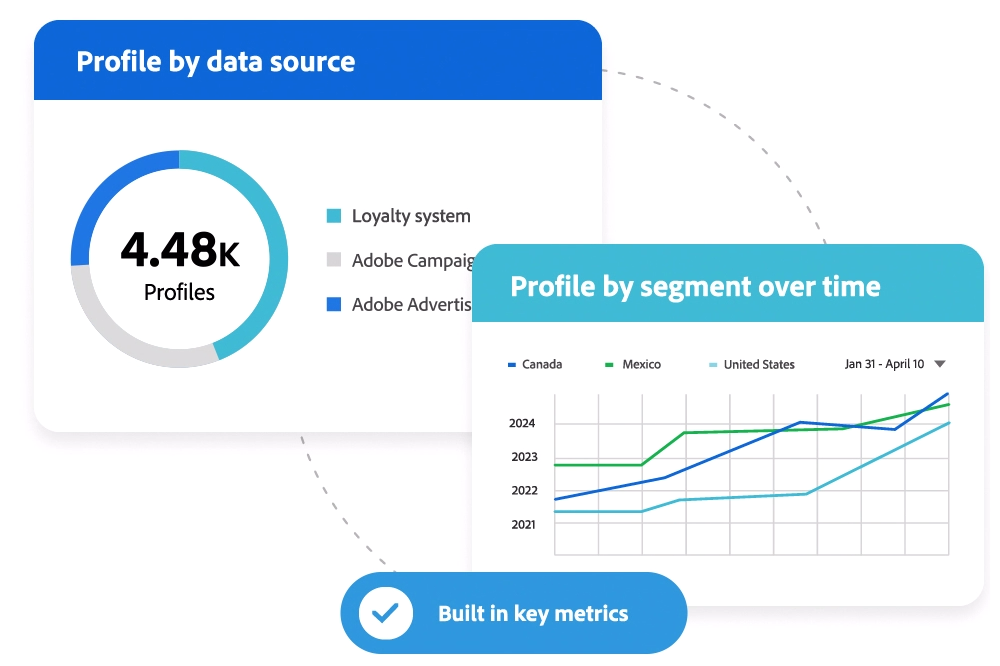
Derive insights into your core audience without the need for external systems.

    • Out-of-the-box metrics. You can use key metrics that come out of the box, such as profile, audience size, and trends.
    • Enhance your analytics.You can enhance your analytics with Adobe Customer Journey Analytics or other analytics tools that are natively integrated.

Use case playbook

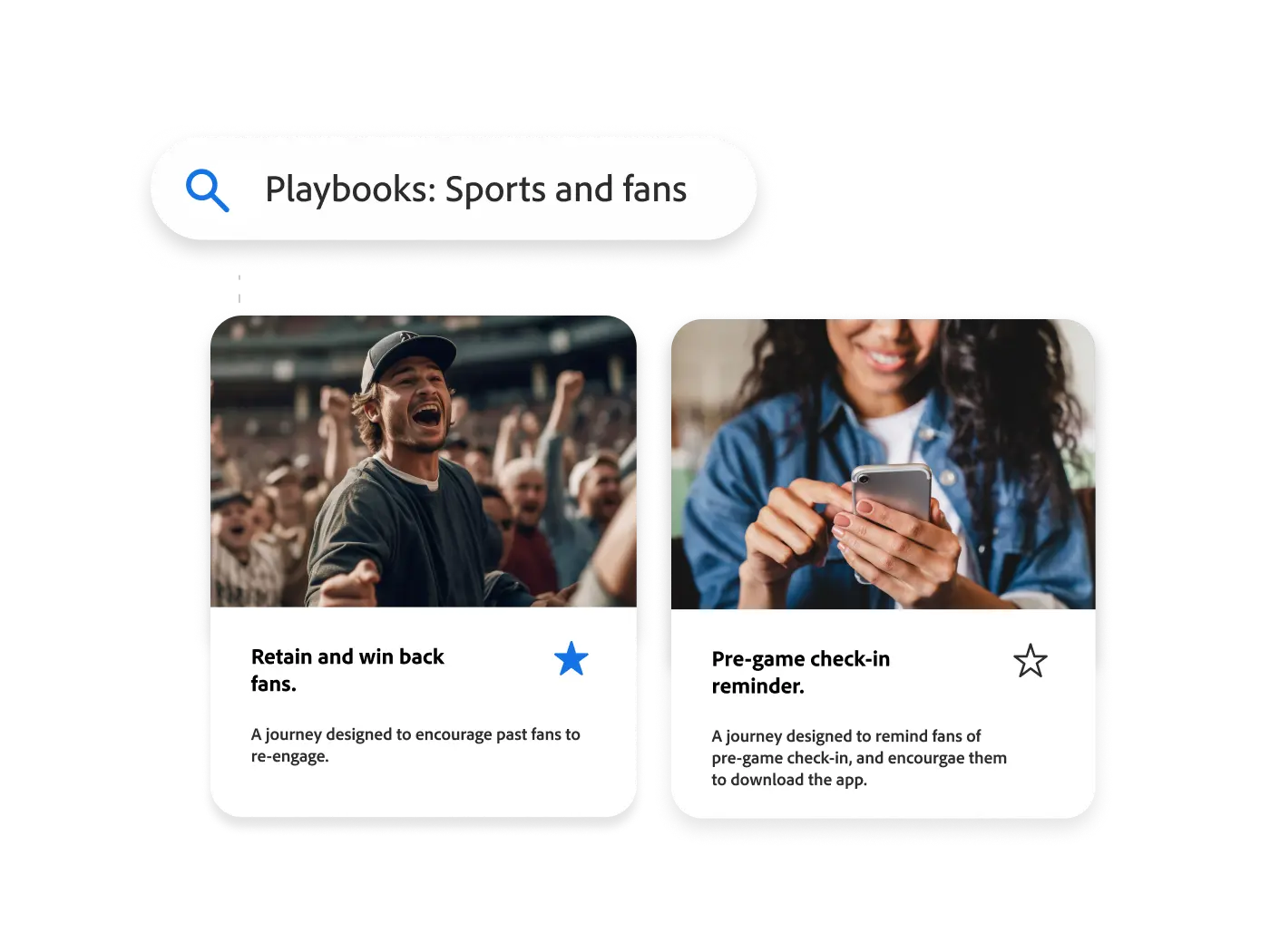
Accelerate time to value with a catalog of marketer-friendly workflow templates that allow you to quickly launch new campaigns.

    • Industry-specific playbooks.You can explore a catalog of over 40 turnkey playbooks curated by industry to prioritize your business.
    • Marketing goals that are automatically translated. Customizable technology packages are available that can be integrated into existing Experience Data Models (XDMs).
    • Collaboration between marketing and technical teams.In-product workflows make it easy to prioritize use cases and align marketing strategies and IT teams with enterprise KPIs.

Customer AI

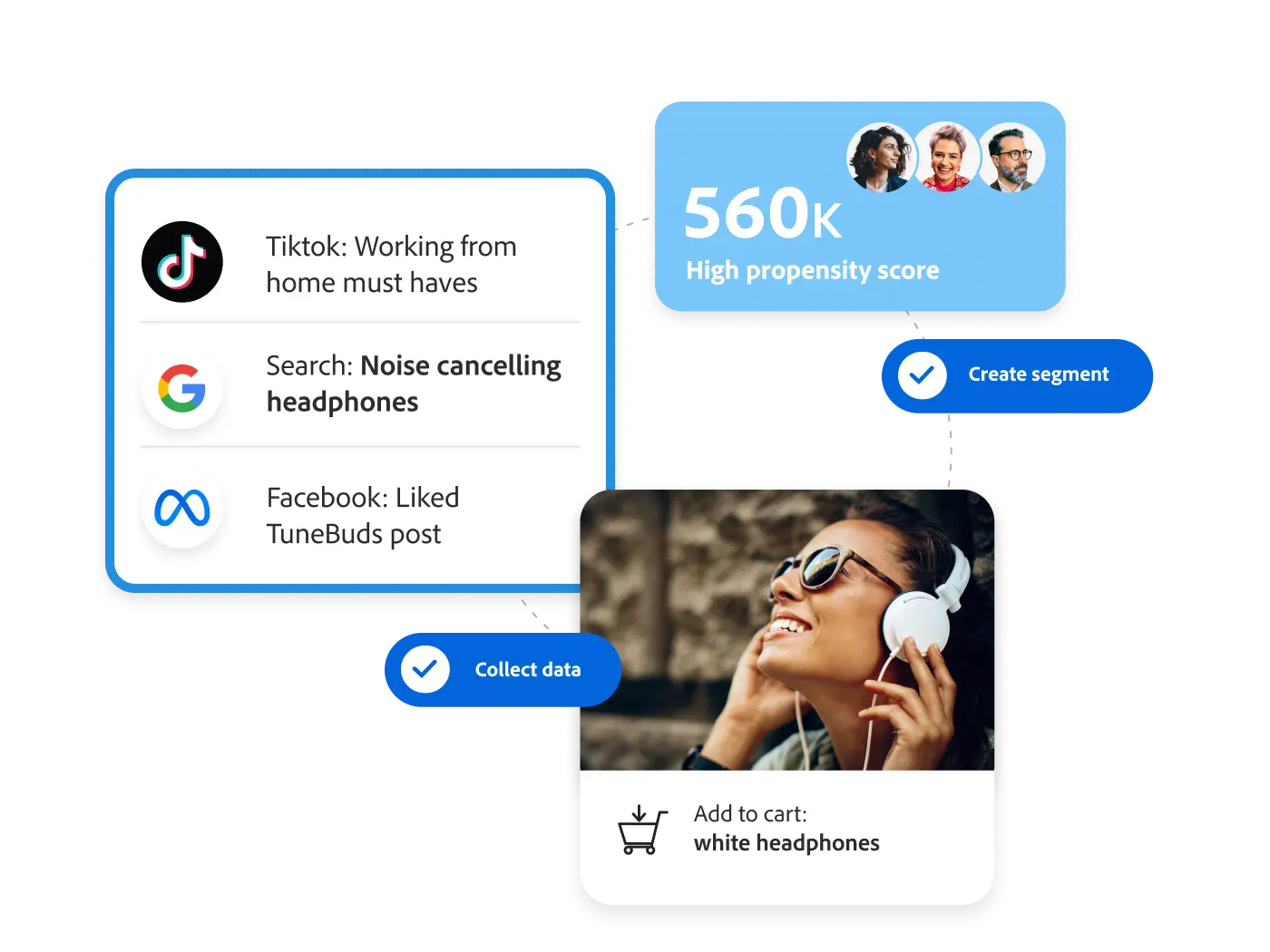
With customizable configurations, you can create customer sentiment scores for specific segments and gain insights to deliver targeted campaigns such as cross-selling, upselling, and churn prevention.

    • Accurate propensity models. Enhance market segmentation and targeting across all customer data sets.
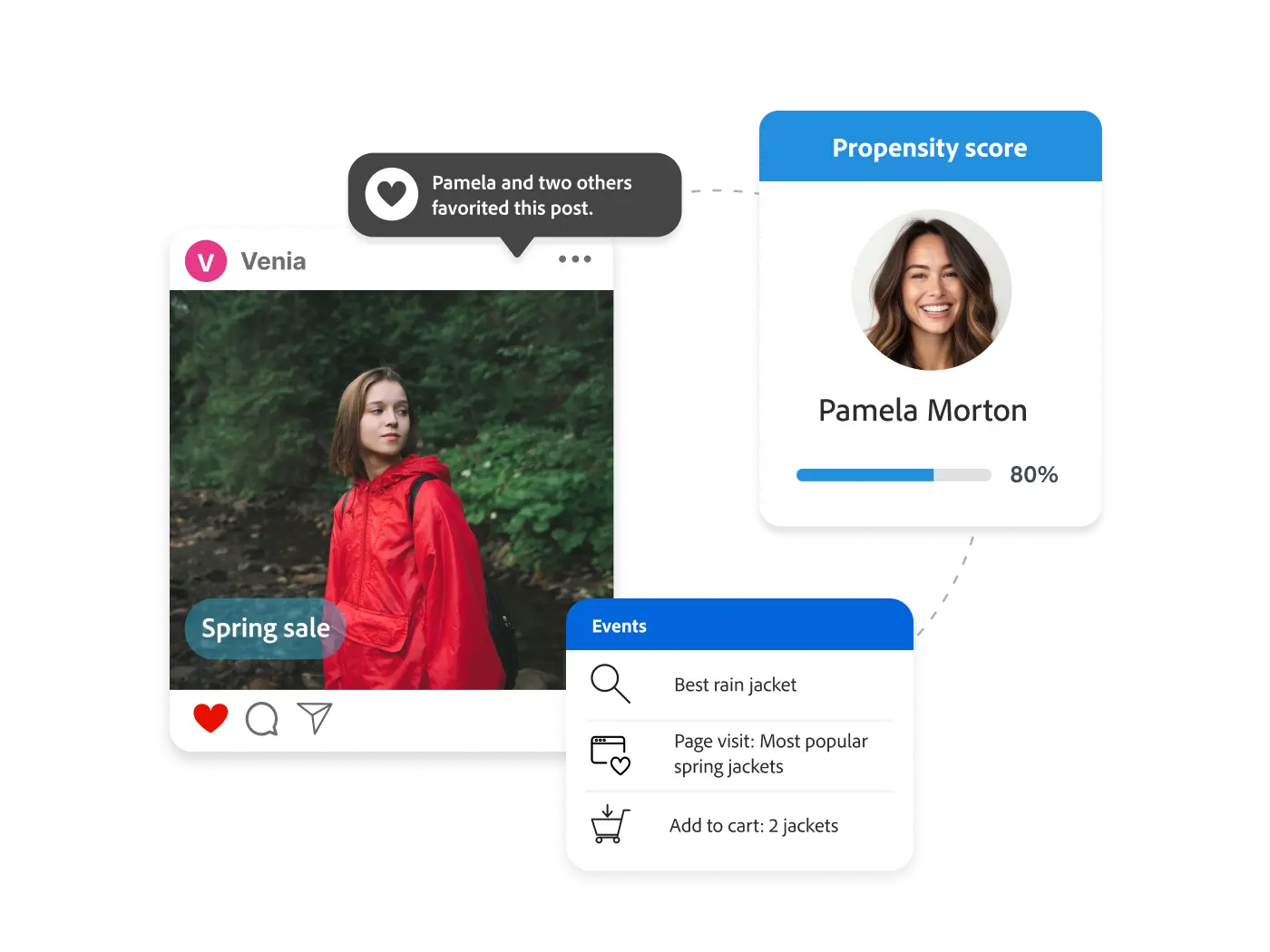
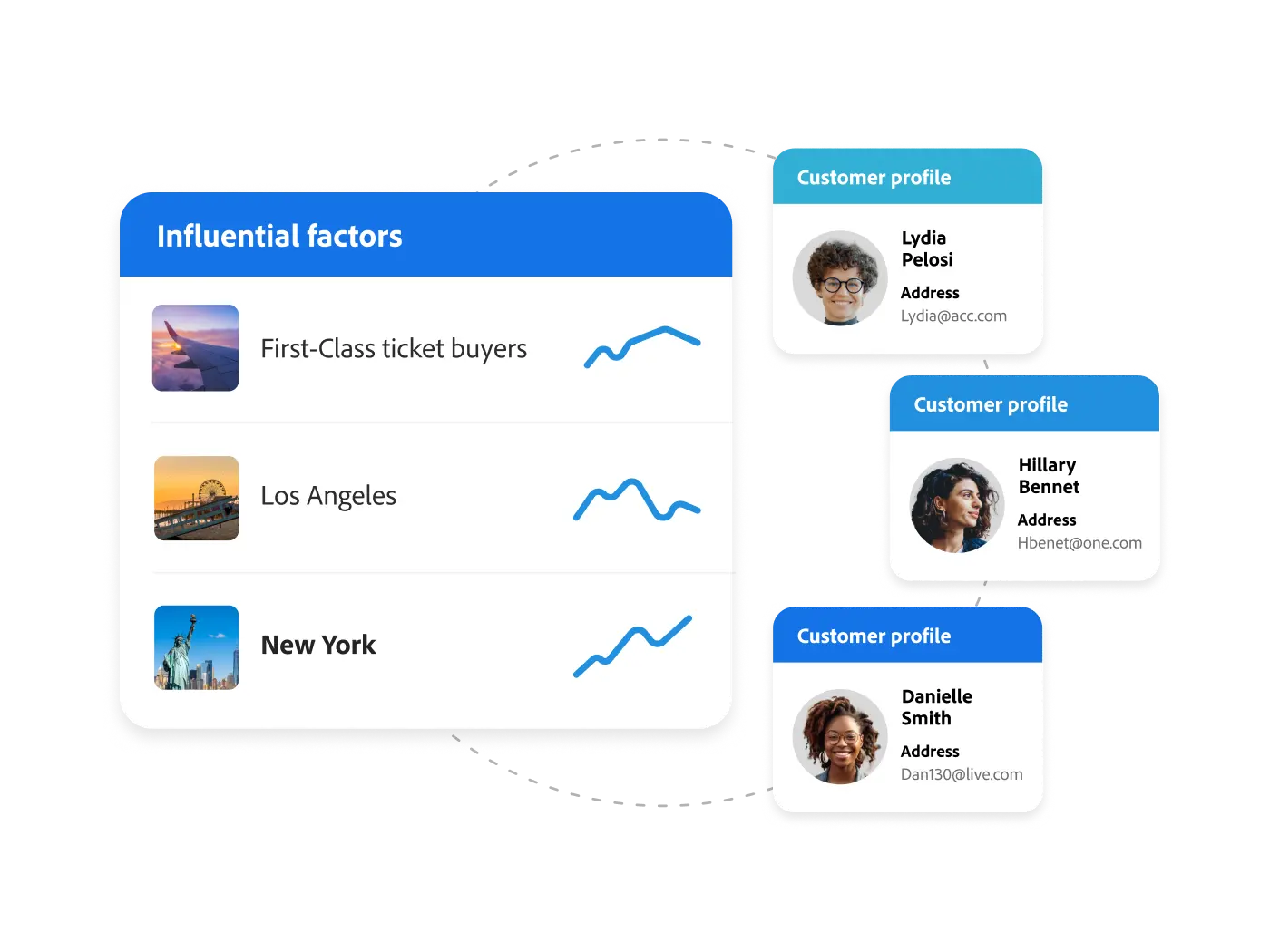
    • Propensity insights. Identify the most influential factors in your propensity score to explain the key drivers of customer behavior.
    • Customization. You can adapt custom journeys to fit the unique scenarios of any business.

Lookalike Audience

Algorithmic modeling can help you identify and activate high-value profiles that are similar to your traditional audience.

    • Increase trust. Built-in data usage and consent policies help you create lookalike audiences while giving trust.
    • Deriving AI insights. Based on AI, it can identify key characteristics of existing audiences to identify similar profiles and enhance personalization.

Lead Forecasting and Account Scoring

With advanced insights, you can expand your leads and enhance your account.

    • Propensity scoring with integrated data. Apply integrated data and AI-powered propensity models to score leads and customer profiles based on the likelihood of progressing through the sales cycle.
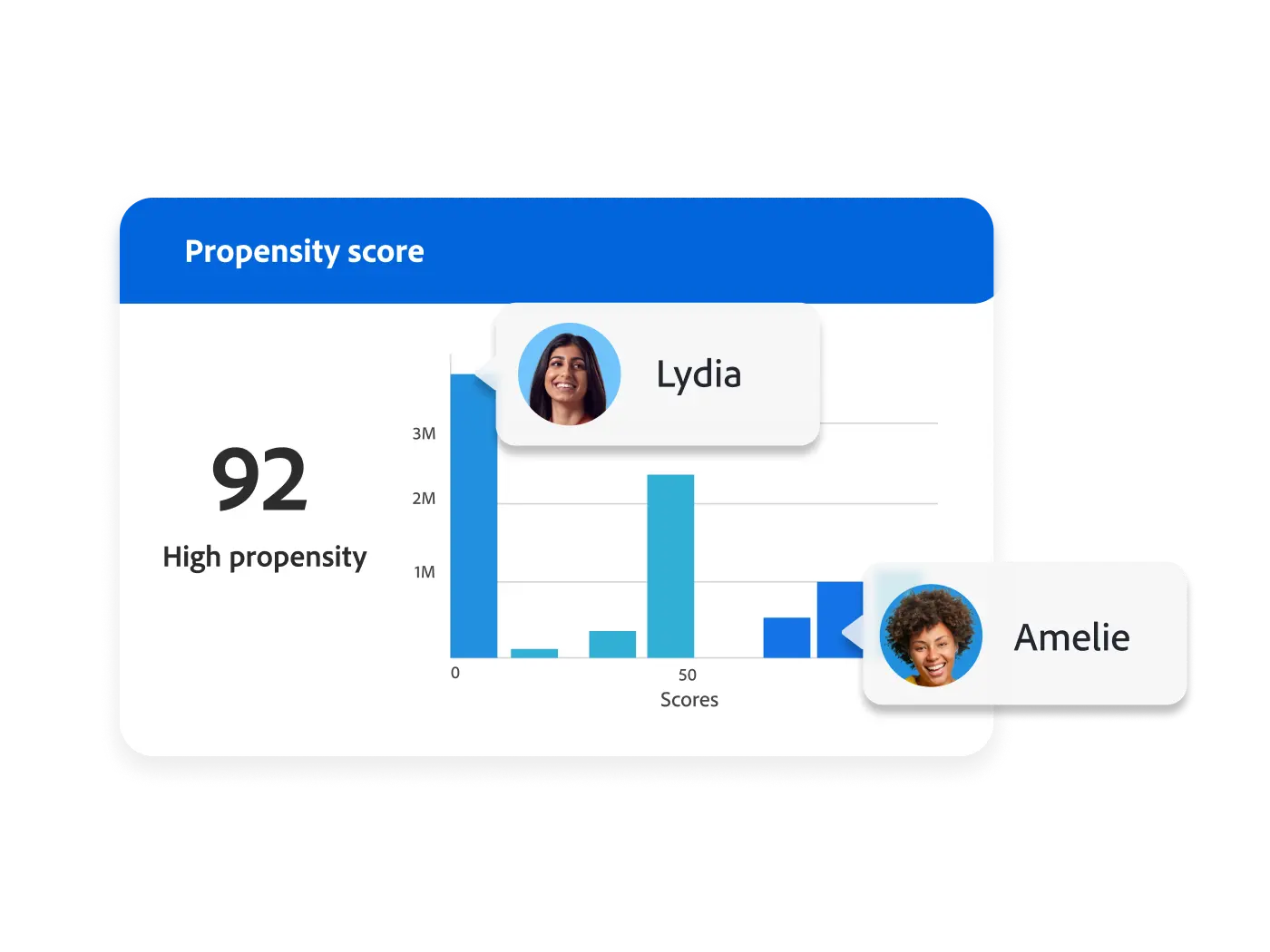
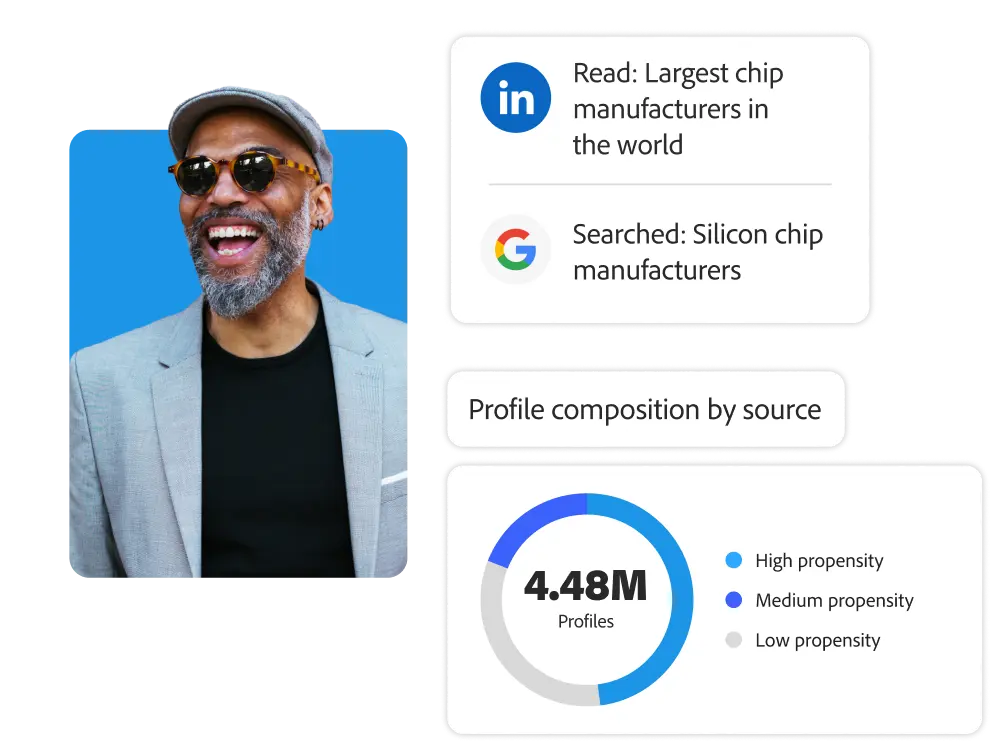
    • Insights scoring. You can see contributing factors in models and propensity groups for propensity (high, medium, low). You can analyze the expected success rate and number of profiles for each group to match your personalization goals.

Product Support Agent

Diagnose, resolve, and report product issues quickly and easily with Adobe's agent AI, Product Support Agent. It supports self-service with interactive guidance, so you can resolve issues faster and be more productive.

    • Problem-solving. Use natural language prompts to instantly get answers to frequently asked questions based on expert-curated documents.
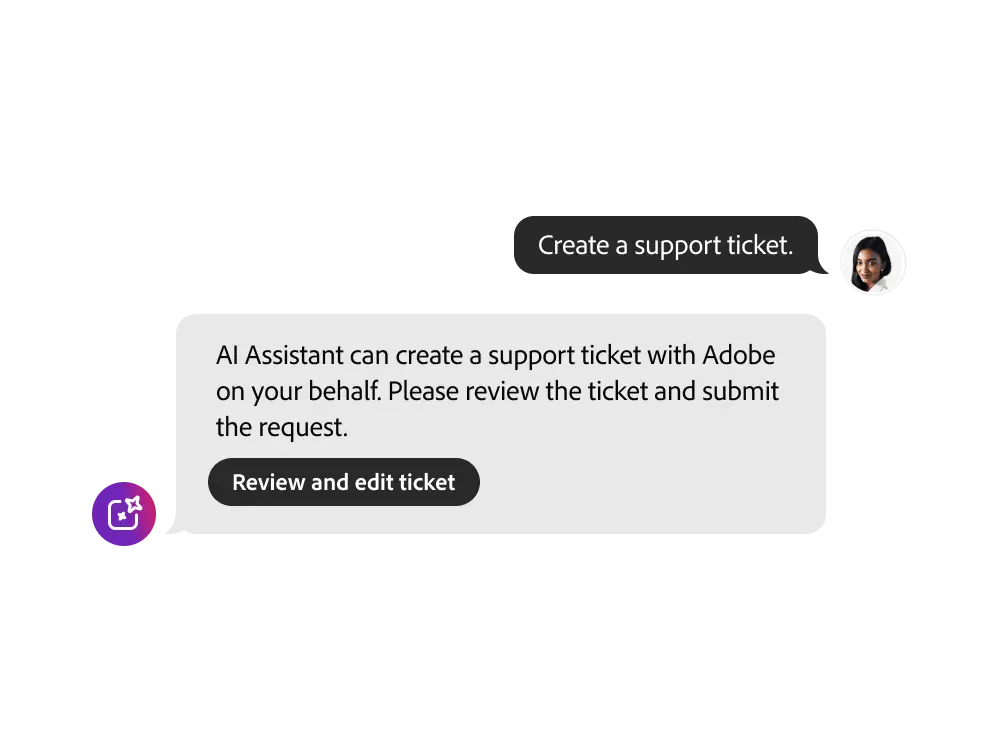
    • Support case management. You can open a support case with the AI assistant. The AI assistant then automatically gathers contextual insights, such as chat logs, IDs, and issue descriptions, to resolve them quickly.
    • Support case tracking. You can seamlessly track the status of your support cases.

Learn how to use Enterprise Audience Management

Experience League offers a wide range of learning content, including documentation, tutorials, and user guides
.

Let me answer any questions you may have.

How does audience management integrate with Adobe Real-Time CDP's core platform?

Audience management is built directly on the Real-Time CDP foundation and works seamlessly with unified customer profiles and real-time data processing. This eliminates data disconnect and manual work that makes it difficult for most marketing and IT teams. Here's how audience management affects your team: Unified customer profiles: Audience management automatically inherits cross-device identity verification and real-time behavioral data, eliminating the need to manage separate systems. Basic segmentation: Build sophisticated audiences using drag-and-drop Boolean logic that updates instantly as customer behavior changes. Federated Data Access (FDA): Solve IT security concerns by querying your existing data warehouse directly without moving sensitive data, while maximizing your current investment.

How does customer AI propensity assessment work in Real-Time CDP?

Customer AI generates individual propensity assessments for all customer profiles to identify prospects with the strongest conversion signals based on actual behavior patterns rather than demographics.
Key features include:

- Individual-level assessments: Each profile is subject to a propensity assessment and the most influential factors driving those predictions.
- Real-time updates: Scores are automatically updated as customer behavior changes.
- Custom Configuration: Set assessments for purchase intent, churn risk, and subscription renewals.
- Native integration: Runs within Real-Time CDP without the need for a separate machine learning platform.

You can segment your database based on propensity level and automatically activate different campaign strategies for high, medium, and low-intent prospects.

How does lookalike audience modeling help you discover new customer segments?

Lookalike audience modeling analyzes the behavior patterns and characteristics of top customers, then expands your targeting by identifying new prospects with similar characteristics that you value from.
Core features:

- AI-Powered Analytics: Examine top customers to identify behavioral and demographic patterns that indicate value.
- Multi-Dimensional Matching: Consider behavior patterns, engagement frequency, channel preferences, product preferences, and more.
- Built-in data governance: Automatically adhere
to consent preferences and data usage policies - Search scalability: Find similar leads across all segment sizes

while maintaining compliance Lookalike modeling helps identify customer segments that share the engagement and purchasing behavior of top customers, helping you go beyond traditional demographic targeting to identify qualified prospects.

Try the power of Adobe Real-Time CDP
for yourself.

Get
it through Adobe Real-Time CDP Check out the benefits you can get.